

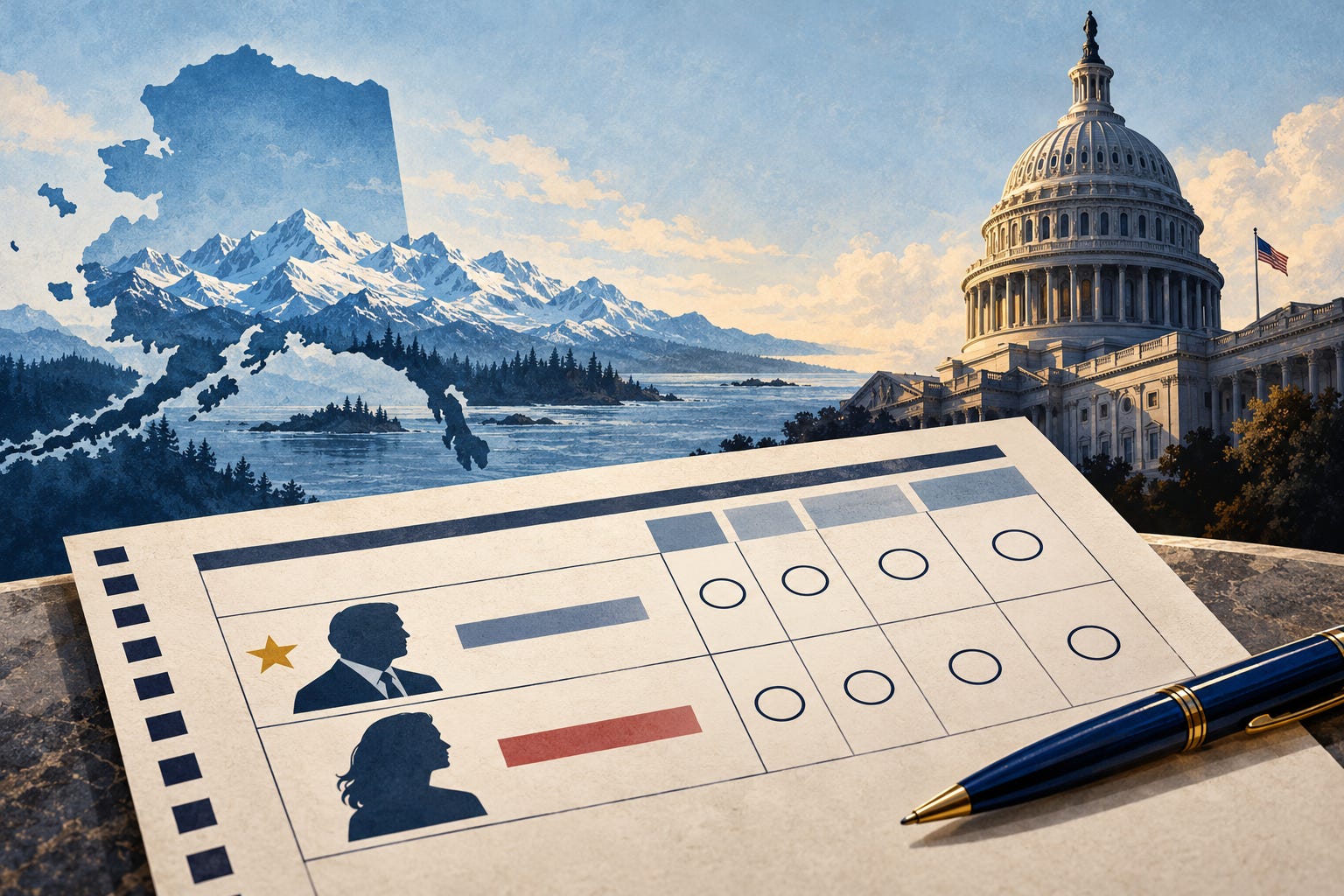
The controversy over two Sullivans on Alaska’s Senate ballot recalls Florida’s 2020 “ghost candidate” scandal. Republican Ileana Garcia defeated Democratic state senator José Javier Rodríguez by just 32 votes, while a recruited candidate with the same surname received more than 6,000.
The Florida case led to a guilty plea by the spoiler candidate and a jury’s guilty verdict against former Republican senator Frank Artiles. Garcia denied involvement and kept her seat. The Republican-controlled Florida Senate had authority to judge the election, but the result stood.
There is a procedural qualification: Rodríguez conceded after the recount and requested an investigation. I have not found a formal seating challenge that the Florida Senate considered and rejected. The criminal prosecution did not automatically reopen the election.
In Alaska, Trump’s Justice Department is asking a federal court to block certification if Senator Dan Sullivan loses and votes for the other Sullivan could have changed the outcome. DOJ’s legal authority to obtain that remedy is disputed.
The court gets a potential bite at the apple. But the ultimate constitutional authority to judge a contested Senate election belongs to the U.S. Senate itself. Rejecting DOJ’s lawsuit would not prevent a subsequent Senate election challenge.
Two other considerations matter. First, the ballot identifies Senator Sullivan as the incumbent and a registered Republican. That is a pretty clear distinction for voters trying to identify their senator.
Second, Alaska uses ranked-choice voting. If the other Sullivan is eliminated, ballots cast for him transfer to each voter’s next available choice. His first-choice total therefore cannot simply be treated as votes lost by the incumbent.
If every voter choosing the other Sullivan also ranks one of the eventual finalists, and the other Sullivan does not reach the final two, “no harm, no foul” is a fair description of the vote-splitting concern. Those ballots still count toward the voters’ preferred finalist.
That would not excuse any independently unlawful conduct. But it would undermine the claim that the extra candidacy deprived the incumbent of those votes.
The ballots needing closer attention would be those that exhaust without reaching either finalist. Even then, leaving later choices blank does not establish that a voter confused the two Sullivans. A court would need evidence, not an assumption that every such voter meant to support the incumbent.
If this becomes a Senate seating fight, the other elections could matter enormously. The outcome could come down to which party has the votes in the Senate, and whether individual senators break ranks.
Lisa Murkowski criticized the Justice Department’s Alaska lawsuit, saying it should never have been filed, making her a potential wild card. Her initial reaction, however, does not establish how she would vote on a later election challenge.
Trump responded by calling her “The Republicans’ Worst Senator, by far”. I guess that made John Cornyn happy—at least someone else was getting top billing.
Murkowski has already demonstrated that she can survive Trump’s opposition: she won reelection in 2022 by defeating his endorsed challenger, Kelly Tshibaka.
And she had defied her party’s voters before: after losing the 2010 Republican primary to Joe Miller, she won the general election as a write-in candidate. She remained a Republican throughout. Losing the nomination did not mean surrendering either her party affiliation or her seat.
This woman is a true maverick. She lost her party’s nomination and won anyway, then survived Trump’s attempt to end her career. Netflix could do worse than a series about her political life—although the writers might struggle to make the fictional version more improbable.
Florida supplies the cautionary precedent: prosecuting an election scheme and undoing the resulting victory are different things. Alaska could test whether the Senate applies a consistent standard when the party benefiting from the alleged scheme changes.
Author’s note: For my broader election outlook, see my Senate forecast and Thirty-Five Marquee House Races. Both take a more skeptical view of Democratic gains than many readers may expect. I see a wide range of plausible outcomes—including continued Republican control of both chambers—and place considerable weight on candidate quality, past polling errors, and the possibility that Republican troubles produce narrower victories rather than Democratic pickups.